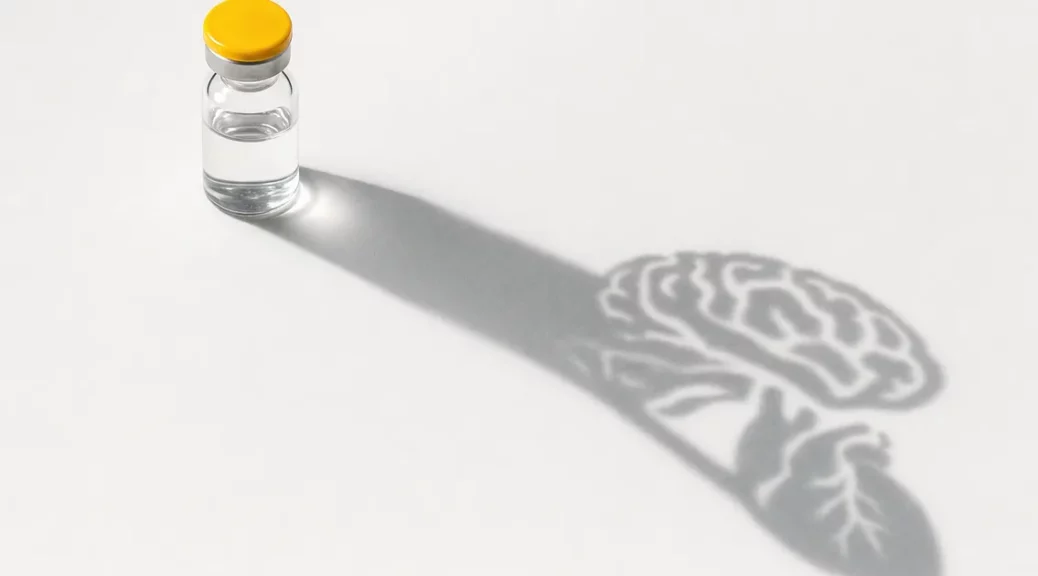
The Shingles Vaccine Keeps Showing Up in Dementia and Heart Data. Here Is What the Evidence Actually Says
Text written with the help of AI.
If you are over 40 and serious about prevention, you probably track lipids, blood pressure, maybe VO2max. Almost nobody puts a vaccine on that dashboard. Yet some of the most interesting prevention data of the past two years concerns the shingles vaccine, which keeps appearing in studies associated with lower rates of dementia and cardiovascular events. This article sorts that evidence into what is established, what is emerging, and what you can realistically do with it.
The Virus You Already Carry
If you had chickenpox as a child, the varicella-zoster virus never left. It retreats into nerve ganglia and waits, held in check by your immune system. As immune surveillance weakens with age, the virus can reactivate as shingles: a painful rash that, according to the CDC, will affect about one in three adults during their lifetime.
Shingles is not just a skin problem. A 2017 systematic review and meta-analysis in the Journal of Stroke and Cerebrovascular Diseases pooled the available cohort data and found that a shingles episode was associated with a 30 percent higher relative risk of stroke or transient ischemic attack, and an 18 percent higher relative risk of heart attack. Other analyses show the danger is concentrated in the first weeks after the rash, when viral reactivation appears to inflame blood vessel walls.
That mechanism matters, because it makes the findings below biologically plausible rather than statistical noise.
Established Evidence: What We Know With Confidence
Two things are solidly established.
First, the vaccine does its primary job well. In the pivotal trials cited by the CDC, the recombinant vaccine (Shingrix, two doses) was 97 percent effective against shingles in adults aged 50 to 69, and 91 percent effective in adults 70 and older. It was about 91 percent effective against postherpetic neuralgia, the lingering nerve pain that can follow an episode. The CDC recommends two doses, 2 to 6 months apart, for immunocompetent adults from age 50.
Second, as noted above, shingles itself raises short-term vascular risk. Preventing the episode removes that trigger. Even before any discussion of brains and hearts, these two facts alone make vaccination status worth a line on your prevention checklist.
Emerging Evidence: The Dementia Signal
A Birthday That Split Two Health Destinies
Picture two neighbors in Cardiff in 2013. One was born on September 1, 1933; the other on September 2, one day later. When Wales rolled out the shingles vaccine that year with limited supply, health authorities drew a hard line: anyone born before September 2, 1933 was permanently ineligible, anyone born on or after that date could get the shot. Two people nearly identical in age, health habits, and environment ended up on opposite sides of a vaccination policy.
That accident of bureaucracy created what researchers call a natural experiment, close to a randomized trial in its ability to rule out the usual objection that healthier people simply choose to get vaccinated. Analyzing the records of over 280,000 older adults, a Stanford-led team reported in Nature in 2025 that receiving the vaccine reduced the probability of a new dementia diagnosis over the following seven years by 3.5 percentage points, a relative reduction of about 20 percent.
Replication, and a Newer Vaccine
One clever study is a curiosity; replication is evidence. The same research group found a similar policy cutoff in Australia's 2016 rollout and published the result in JAMA in 2025: eligibility for the vaccine reduced new dementia diagnoses by 1.8 percentage points over 7.4 years. A separate analysis of Canadian rollouts, published in The Lancet Neurology, points the same way.
Both natural experiments used the older live vaccine (Zostavax). What about Shingrix, the one currently offered? An Oxford team led by Maxime Taquet compared US patients vaccinated just before and just after the country's rapid switch from the live to the recombinant vaccine. Published in Nature Medicine in 2024, the study found the recombinant vaccine was associated with a 17 percent further reduction in dementia diagnoses over six years, roughly 164 additional days lived without a diagnosis among those eventually affected.
Emerging Evidence: The Heart Signal
The cardiovascular data is younger but moving in the same direction.
A nationwide South Korean cohort of 1,271,922 adults aged 50 and over, published in the European Heart Journal in 2025, found that people who received the live shingles vaccine had a 23 percent lower risk of overall cardiovascular events and a 26 percent lower risk of major adverse cardiac events, with the association persisting up to eight years and appearing strongest in men, adults under 60, and people with less healthy lifestyles.
In 2026, a US retrospective study presented through the American College of Cardiology examined more than 246,000 adults aged 50 and over who already had atherosclerotic heart disease. In the year after vaccination, vaccinated patients had a 46 percent lower rate of major adverse cardiac events, a 32 percent lower rate of heart attack, and a 25 percent lower rate of stroke than matched unvaccinated patients.
Treat these heart numbers with more caution than the dementia numbers. They come from observational cohorts, not natural experiments, so healthy-user bias cannot be fully excluded, and the US data covers only one year of follow-up. The signal is consistent and biologically plausible; it is not yet proof.
A Practical Sequence for Readers 50 and Over
This is general information, not medical advice; your clinician knows your history. That said, the process itself is simple:
- Check your records. Find out whether you have had zero, one, or two doses of Shingrix. Many people vaccinated before 2020 received Zostavax, which is no longer used in the US.
- Confirm your eligibility. The CDC recommendation covers immunocompetent adults 50 and older, and immunocompromised adults from age 19 under specific guidance.
- Raise it at your next appointment. Ask specifically about timing around other vaccines and your personal contraindications.
- Book both doses at once. Dose two comes 2 to 6 months after dose one. Scheduling it on the spot is the single best way to actually complete the series.
- Log it on your prevention dashboard, next to lipid panels and blood pressure, and revisit the evidence yearly; a randomized trial of vaccination for dementia prevention is the obvious next step for the field.
Mistakes to Avoid
- Waiting until 65. Eligibility starts at 50 in the US, and the Korean data suggests associations were strongest in younger recipients. Shingles risk also rises steadily through the 50s.
- Stopping after one dose. The 90-plus percent efficacy figures come from the two-dose series. If more than six months have passed, the CDC says to get dose two as soon as possible, not to restart.
- Counting an old Zostavax as done. The CDC recommends Shingrix regardless of prior Zostavax, and the Nature Medicine data suggests the recombinant vaccine carries the stronger dementia association.
- Reading the vaccine as a heart or brain treatment. It is a shingles vaccine with promising off-target associations. Nobody should skip statins, blood pressure control, or exercise because of it.
- Dismissing everything as "just observational." The Welsh and Australian designs are quasi-randomized, which specifically addresses the healthy-user objection. That is meaningfully stronger than a typical cohort study, even if weaker than a trial.
Personal Experimentation: What n=1 Can and Cannot Show
Honesty matters here: unlike a sleep protocol or zone 2 block, you cannot feel a 20 percent reduction in dementia risk. This is a population-level bet, and the only observable markers at the individual level are process markers. Concretely, for a 54-year-old building an annual prevention review, that means three checkboxes: series completed on schedule, expected short-term side effects resolved within two to three days (a sore arm and fatigue are common with Shingrix), and no shingles episode in the years that follow. That last one is the marker the vaccine was designed for, and the one you will actually notice.
The Bottom Line
The established case for shingles vaccination after 50 stands on its own: high efficacy against a painful, common disease that also spikes short-term stroke and heart attack risk. The emerging case, built on natural experiments in Wales and Australia and million-person cohorts in Korea and the US, suggests the benefit may extend to the brain and heart. You do not need the emerging evidence to be right for the decision to make sense; it simply raises the value of a conversation most people over 50 have not yet had with their doctor. Put your vaccination status on the same page as your lipid panel, and have that conversation this year.
Thrive Through Time is an independent, evidence-first longevity publication. If this analysis was useful, the weekly newsletter covers one prevention topic in this format every week.
Sources
- Eyting M. et al., "A natural experiment on the effect of herpes zoster vaccination on dementia," Nature, 2025: https://www.nature.com/articles/s41586-025-08800-x
- Pomirchy M. et al., "Herpes Zoster Vaccination and Dementia Occurrence," JAMA, 2025: https://pmc.ncbi.nlm.nih.gov/articles/PMC12019675/
- Taquet M. et al., "The recombinant shingles vaccine is associated with lower risk of dementia," Nature Medicine, 2024: https://www.nature.com/articles/s41591-024-03201-5
- Kim S. et al., "Live zoster vaccination and cardiovascular outcomes: a nationwide, South Korean study," European Heart Journal, 2025: https://pubmed.ncbi.nlm.nih.gov/40324473/ (ESC press summary: https://www.escardio.org/news/press/press-releases/shingles-vaccine-lowers-the-risk-of-heart-disease-for-up-to-eight-years/)
- American College of Cardiology, "Shingles Vaccine Drastically Cuts Risk of Serious Cardiac Events," press release, March 2026: https://www.acc.org/about-acc/press-releases/2026/03/16/19/33/shingles-vaccine-drastically-cuts-risk-of-serious-cardiac-events
- Erskine N. et al., "Risk of Stroke/Transient Ischemic Attack or Myocardial Infarction with Herpes Zoster: A Systematic Review and Meta-Analysis," Journal of Stroke and Cerebrovascular Diseases, 2017: https://pubmed.ncbi.nlm.nih.gov/28501259/
- CDC, "Shingles Vaccination," accessed August 2026: https://www.cdc.gov/shingles/vaccines/index.html
- Herpes zoster vaccination and incident dementia in Canada, The Lancet Neurology, 2025: https://www.thelancet.com/journals/laneur/article/PIIS1474-4422(25)00455-7/fulltext